Barbell bench press: how to do it right
The bench press is the go-to exercise for chest strength and size. Done right, it works your chest, triceps and shoulders without pain; done wrong, it's one of the most common causes of shoulder trouble in the gym.
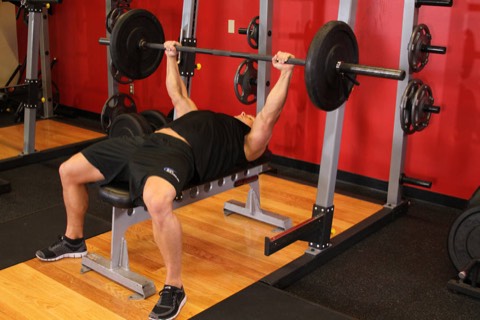
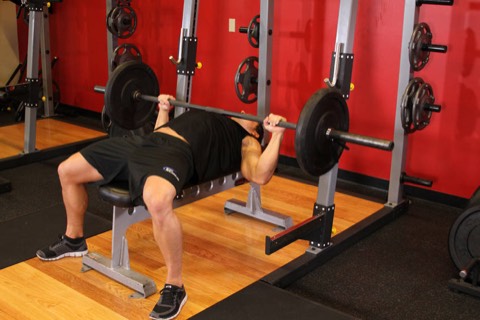
Step by step
- Lie on the bench with your eyes right under the bar and your feet flat on the floor.
- Pull your shoulder blades together and down, as if tucking them into your back pockets. Keep a slight natural arch in your lower back, with glutes and upper back on the bench.
- Grip the bar a little wider than shoulder width, wrists straight over your elbows.
- Unrack the bar with straight arms and bring it over your shoulders.
- Take a breath and lower the bar under control to your lower chest, elbows at about 45–70° from your body, not flared out in a T.
- Press the bar up and slightly back until it's over your shoulders, and breathe out at the top.
Tip: If you train heavy on your own, set the rack's safety bars or ask someone to spot you.
Common mistakes
This loads the shoulder heavily. Tuck your elbows so your arms form an arrow, not a T.
The bounce takes work off the muscle and is risky. Pause briefly at the bottom and press.
Usually a sign of too much weight. Drop the load and drive your feet into the floor, not upwards.
If your shoulders roll forward, your chest works less. Lock your shoulder blades before unracking.
Sets and reps
Guide ranges. Start with a weight where the last rep is hard but your technique holds.
| Goal | Sets | Reps | Rest |
|---|---|---|---|
| Strength | 3–5 | 3–6 | 2–3 min |
| Build muscle | 3–4 | 6–12 | 1.5–2 min |
| Health and fitness | 2–3 | 10–15 | 1 min |
In GymOrbita you log every set and the app suggests the weight for your next session based on what you did last time.
Alternatives
If the machine is busy or you want a variation:
FAQ
How low should the bar go?
Down to touch your lower chest, around the breastbone, without bouncing. If your shoulder complains, try a slightly narrower grip and tucked elbows.
Barbell or dumbbell bench press?
Both work. With a barbell you can lift more and track progress easily; dumbbells give a freer range and even out differences between arms.
General technique information, not a substitute for professional advice. If you have an injury or pain, check with a doctor or physiotherapist first.
Add barbell bench press to your routine
GymOrbita has this exercise with its animation: log the weight and reps of every set and track your progress. Free.