Step by step
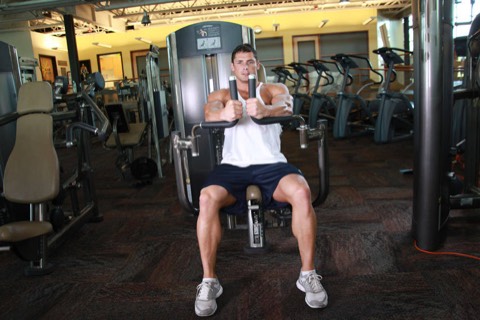
- Adjust the seat so the handles are at chest height.
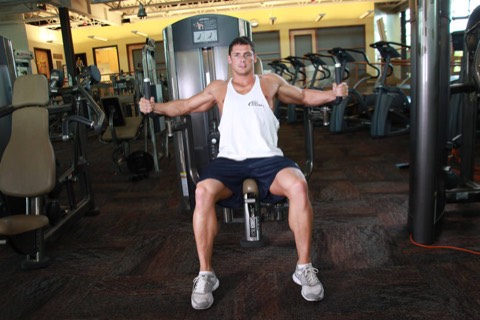
- Sit with your back against the pad and grab the handles or rest your forearms on the pads, depending on the model.
- With elbows slightly bent and fixed, bring your arms together in front of your chest.
- Squeeze your chest for a moment when the handles meet.
- Open your arms slowly until you feel a stretch in your chest, without going behind your shoulder line.
Tip: Use a weight you can control on the way back: the opening phase is where you feel your chest most.
Common mistakes
With the handles above your shoulders, your shoulders work too much. Set them at chest height.
Stretching your arms behind your body strains the shoulder. Stop when your elbows line up with your torso.
Leaning forward to bring your arms together takes work off your chest. Keep your back against the pad.
Sets and reps
Guide ranges. Start with a weight where the last rep is hard but your technique holds.
| Goal | Sets | Reps | Rest |
|---|---|---|---|
| Strength | 3–5 | 3–6 | 2–3 min |
| Build muscle | 3–4 | 6–12 | 1.5–2 min |
| Health and fitness | 2–3 | 10–15 | 1 min |
In GymOrbita you log every set and the app suggests the weight for your next session based on what you did last time.
Alternatives
If the machine is busy or you want a variation:
FAQ
Does the pec deck build muscle?
Yes, as a complement to pressing exercises. It works well for sets of 10–15 reps at the end of a chest session.
General technique information, not a substitute for professional advice. If you have an injury or pain, check with a doctor or physiotherapist first.
Add pec deck to your routine
GymOrbita has this exercise with its animation: log the weight and reps of every set and track your progress. Free.