Its parts
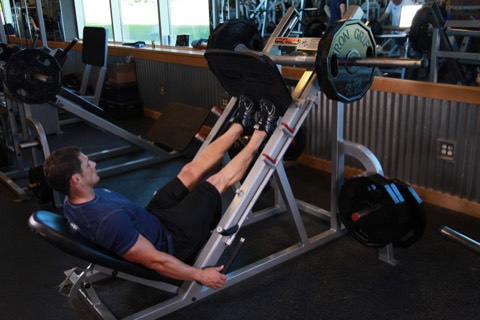
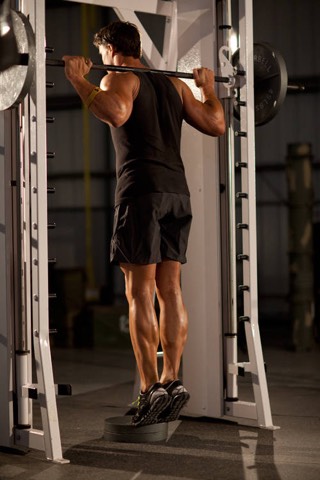
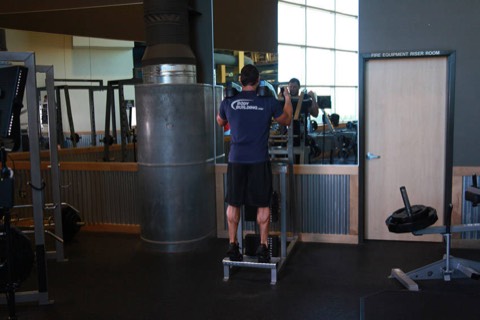
The visible part, with two heads. It crosses the knee, so it works with your leg straight: standing raises and leg press.
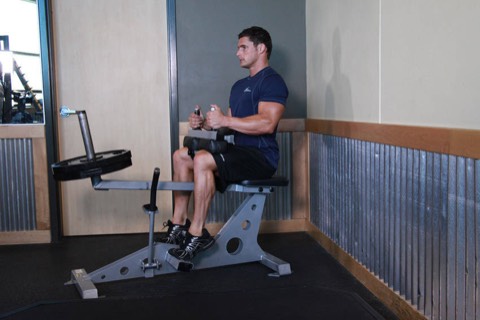
Under the gastrocnemius. It works mostly with your knee bent: seated raises.
How to train it
- Lower all the way until you feel the stretch and pause at the bottom.
- Rise up onto your toes, without bouncing.
- Pair a standing raise (gastrocnemius) with a seated one (soleus).
- Calves handle lots of reps: sets of 12–20 work well.
How many sets
About 6–10 sets a week. If they're lagging, train them at the start of leg day.
Sample workout
Standing for the gastrocnemius and seated for the soleus, pausing at the bottom of every rep.
| Exercise | Sets | Reps |
|---|---|---|
| Standing calf raise | 4 | 8–12 |
| Seated calf raise | 3 | 12–20 |
Log this workout in GymOrbita: the app saves every set and suggests the weight for your next session.
Common mistakes
Bouncing uses the tendon, not the muscle. Pause for a second at the bottom.
Half reps with heavy weight do little. Drop the weight and go all the way down and up.
If you bend your knees to push up, your quads take over. Keep your legs almost straight.
FAQ
Why are my calves so hard to grow?
Genetics plays a big part, but they're also often trained little and with short reps. Try pauses at the bottom and more sets.
Standing or seated calf raises?
Both: standing works the gastrocnemius more and seated the soleus.
General training information, not a substitute for professional advice. If you have an injury or pain, check with a doctor or physiotherapist first.
Routines that train it
Other muscles
Train your calves with GymOrbita
Build your routine with these exercises, log weight and reps and see on the muscle map what you train each week. Free.